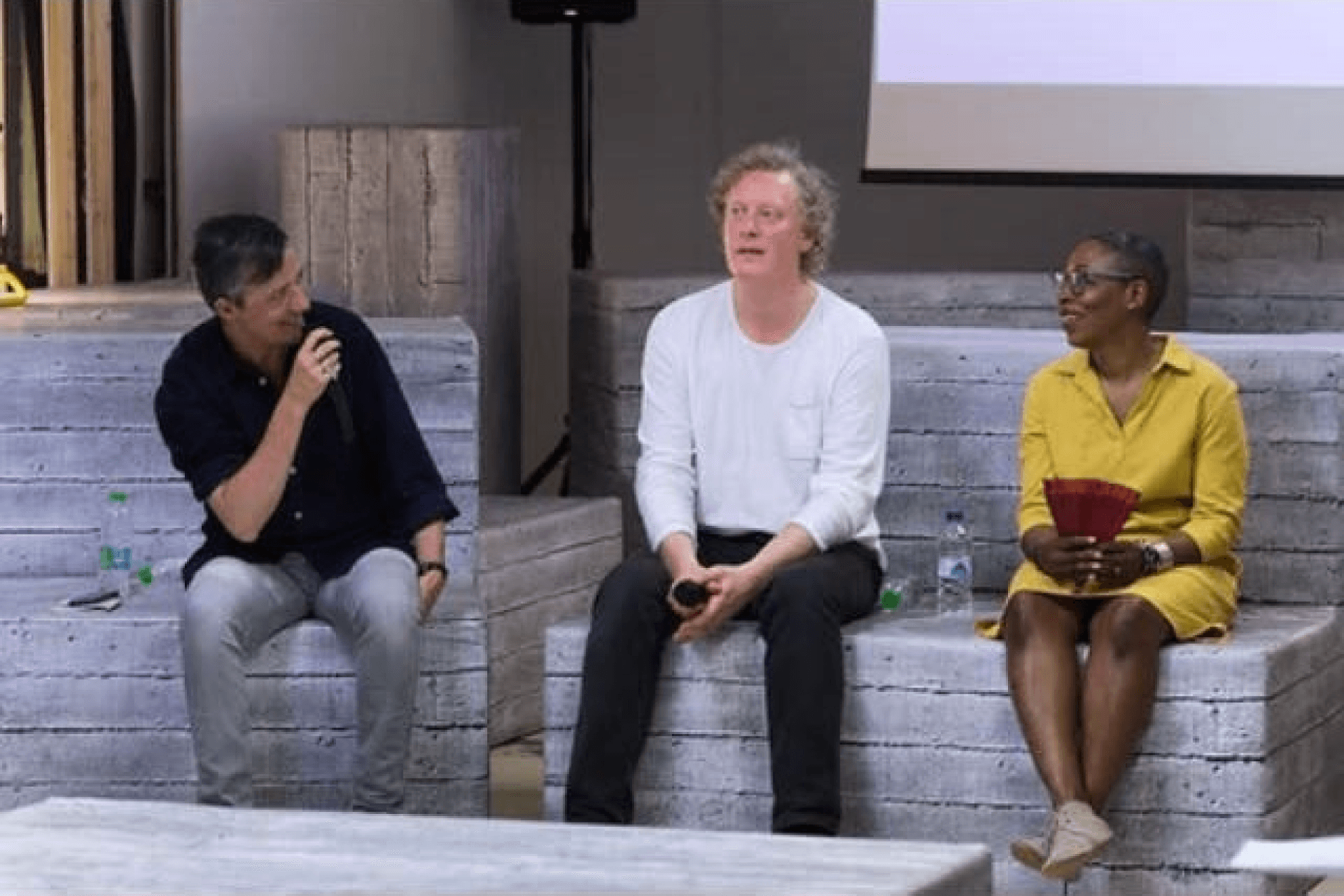
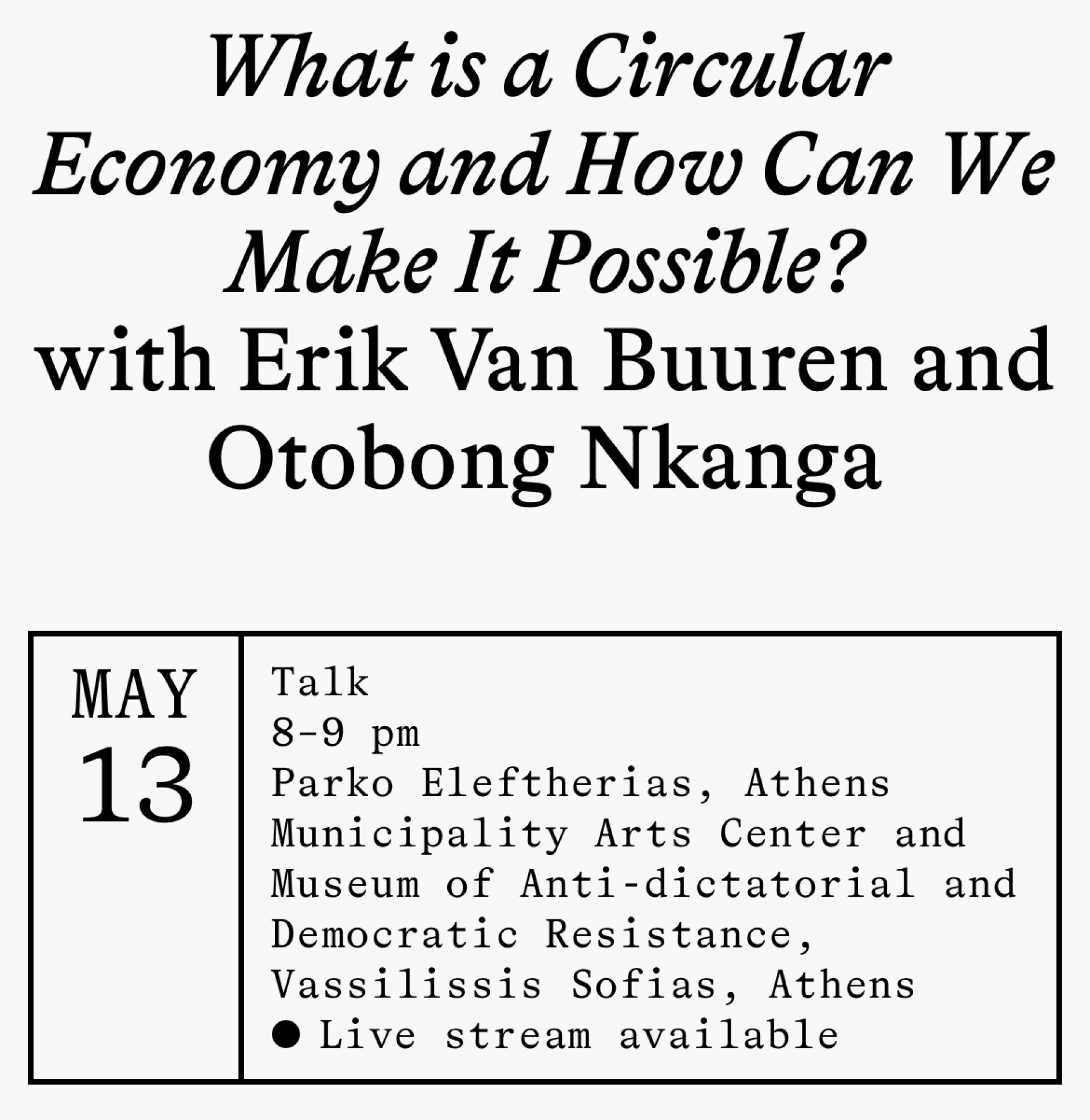
Documenta14 / 2017, May 13
What is a Circular Economy and How Can We Make It Possible?
Erik van Buuren takes us to the origin of the extractive societal model in Athens and shows us a transition model towards a circular economy for the future.
The hunt and greed for resources has shaped economic and societal models over the ages. A growing world population is affecting the way resources are being depleted, causing major societal disruption on a global scale. How can we learn from the past to develop beneficial future scenarios for all through the concept of circular economies? The transition into a circular economy model can only succeed if, besides the predominating economic focus, it is accompanied with a holistic approach including human rights, local communities and intelligent distribution and use of new technology.
Otobong Nkanga seeks to pervade the complex layers of the traces left by nature, left by humans. She examines ideas of land, home, and displacement. She researches how these notions are connected with memory. She digs into the fabrics of time. She delves into broad historic contexts and present realities. She engages with a wide spectrum of disciplines. She submerges herself in archives, examines raw material, and consults experts. She uses all kinds of media: drawing, installation, video, performance. All to understand how land and its natural resources are entwined with greed, pain, hope, knowledge. How is this reflected in material objects as much as in intangible elements, those wrapped in complicated notions of value and remembrance?
Dilijan Arts Observatory, Armenia
2016
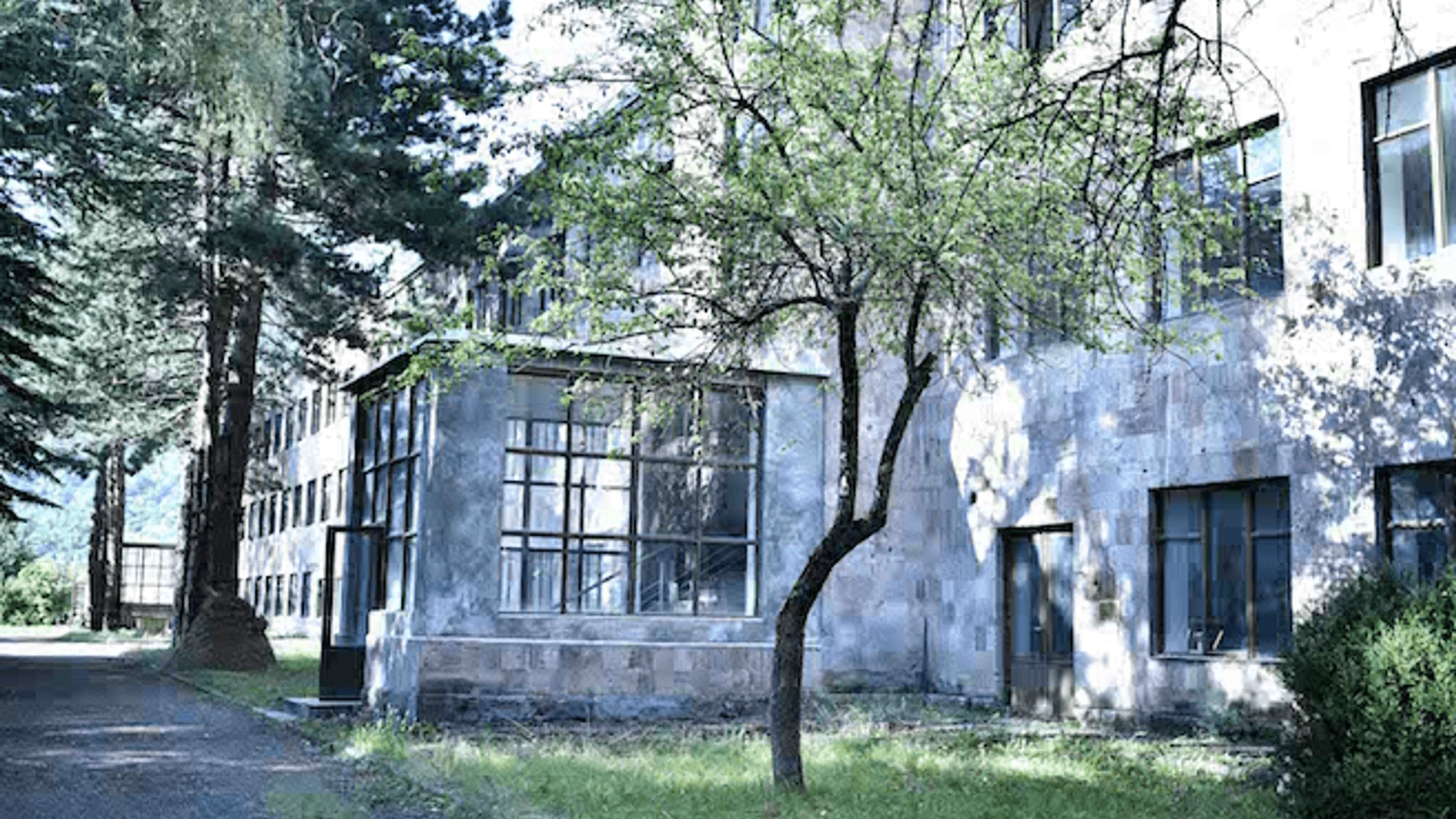
The Arts Observatory took place in Dilijan, Armenia, from August 22 to September 11, 2016. Curated by Clémentine Deliss.
In the ancient spa town and mountain retreat of Dilijan—which once hosted writer Anna Seghers, and composers Dmitri Shostakovich and Benjamin Britten—a group of over 40 artists, designers, historians and practitioners undertook fieldwork in the town, working closely with its citizens and identifying local wisdom and folkways.
Erik participated as materials scientist and circularity expert holding workshops and providing artists with in-situ advice and projections for their work.
Fieldwork activities included investigations into memory and transmission, composition and astronomy; Soviet architecture and design; style, crafts, graphics; culinary knowledge; wilderness, botany and future products for survival.

The Arts Observatory, which exenteded into the town of Dilijan and neighbouring villages, established its headquarters at “Impuls” the former Soviet electronics factory. A classic example of Soviet industrial architecture, Impuls once employed over 4000 local people, of which the majority were women. It was under the order of the Soviet Defence Ministry before it was privatised in 1991. The factory had been abandoned for over ten years, leaving all the old machinery, furniture and workers’ archives in situ.